
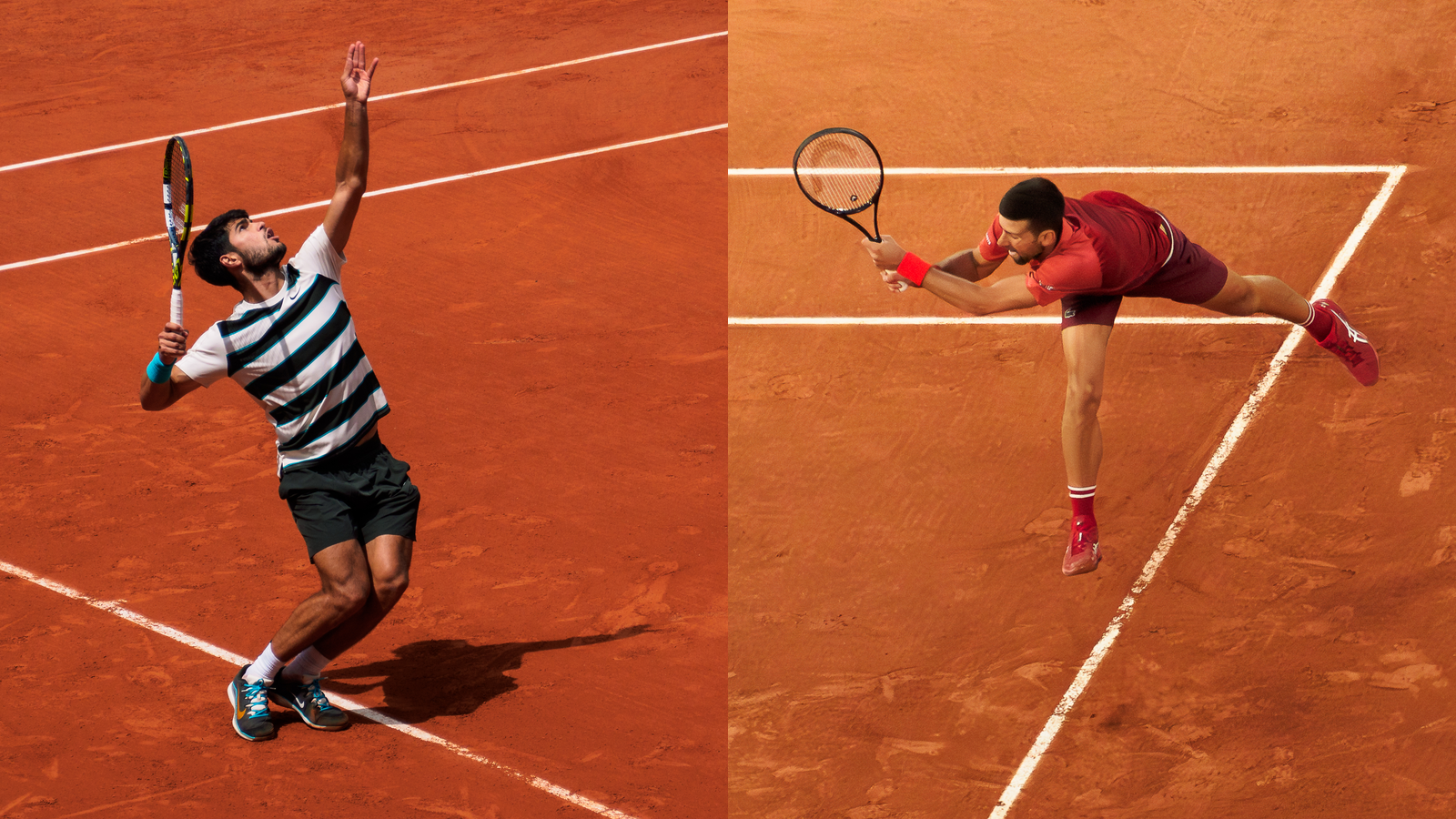
Carlos Alcaraz is out of Shanghai. Six days after lifting the trophy in Tokyo, the second seed was beaten 7-5, 7-6(4) by Zizou Bergs in Monday’s third round. Novak Djokovic had already gone, losing his opening match to Hubert Hurkacz just three days after winning in Beijing. Two champions arrived with fresh titles. Neither made it to the last 16.
For Alcaraz, the damage came from a Belgian who kept taking the match to him. Bergs broke the world No. 3 three times and won 79% of points behind his first serve. Shanghai’s fast courts rewarded his attacking tennis, and the world No. 39 looked on course to finish the job when he served for the match at 5-4 in the second set.
Alcaraz broke back and forced a tie-break, giving Bergs another test of nerve. The Belgian passed it. From 4-4, he won the final three points to seal the upset and book a fourth-round meeting with Tommy Paul.
The defeat ended Alcaraz’s seven-match winning streak. “I would say it was a really bad level from me,” he said in his post-match assessment. He gave Bergs credit, but was frustrated with his own play at the important moments. After his Tokyo triumph, Shanghai was a sharp setback.
Djokovic’s health concerns resurface
Djokovic’s exit on Friday brought fresh questions about his physical condition. It was a quick change of mood after Beijing, where he had won his 102nd tour title earlier in the week.
Hurkacz made that turnaround especially difficult. The 2023 Shanghai champion beat Djokovic 6-4, 6-3 in the second round, Djokovic’s first match after a bye. One break in each set was enough. “It was a really tough draw for me,” Djokovic said, acknowledging that he had struggled to adjust to the Pole’s serve.
But Djokovic’s Beijing run is still fresh. He recorded wins over three Top-10 opponents on consecutive days: Alexander Zverev, Daniil Medvedev and Alex de Minaur. Against Zverev, he came from a set down to win 4-6, 6-4, 6-4. It was a substantial win over an elite opponent, five days before his Shanghai defeat.
The next two matches ended early. Medvedev was defaulted after a ball struck a spectator, with Djokovic leading 7-5, 5-3. De Minaur retired in the final with Djokovic ahead 7-6(3), 0-1. The unusual finishes matter when judging the three-win tally, but Djokovic had put himself in front in both matches.
Djokovic’s Beijing title showed that he can still compete with the best. His physical difficulties deserve equal weight. Earlier in Beijing, he described persistent health problems, explicitly distinguishing them from a lack of stamina. In Shanghai, his official website reported that he told his team his right arm and shoulder were trembling.
Hurkacz deserves credit for a strong performance, particularly on serve. For Djokovic, the question now extends beyond reproducing his best tennis to how consistently he can feel well enough to play it. His plans to rest before the indoor swing reflect that challenge. Shanghai raises fresh concerns about his physical condition, while Beijing remains evidence of what he can still achieve.
Photo credits
Archive photos: Kuberzog, Roland-Garros. Alcaraz, 26 May 2025 (CC BY-SA 4.0); Djokovic, 28 May 2024 (CC BY 4.0). Cropped and resized; composite CC BY-SA 4.0.




