
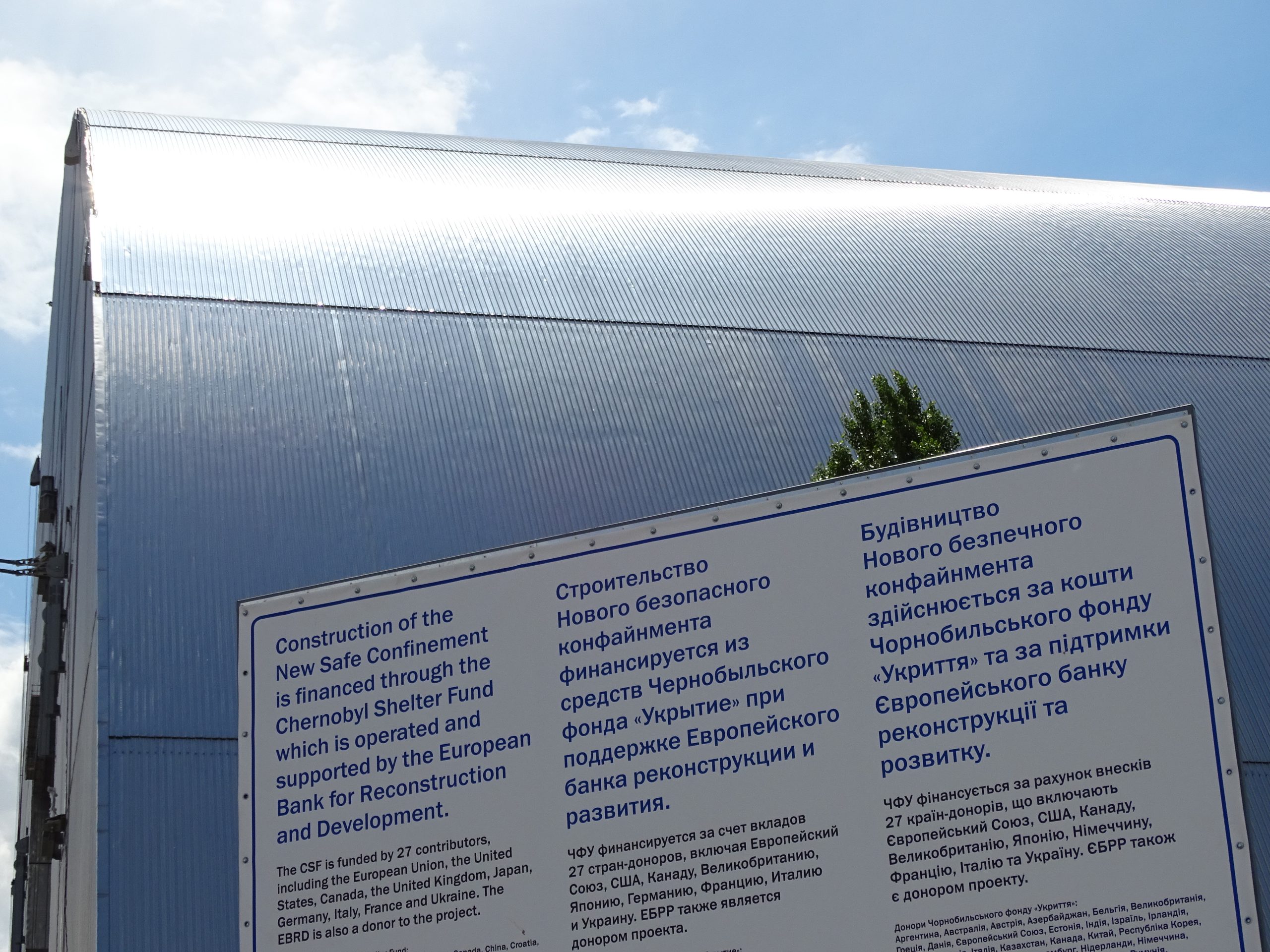
Photo credits
Photo: Adam Jones / resized and cropped; adapted image licensed CC BY-SA 2.0.News update · Chornobyl · Project completion announced 9 September 2026
Chornobyl’s continuing work needs electricity: managing radioactive waste, spent fuel and the structures protecting the destroyed reactor are long-term responsibilities. A new 2 MW solar installation is now contributing to that supply, according to a UNDP announcement on 9 September.
An international project with a practical purpose
UNDP installed the plant using about US$825,000 from Japan, building on Lithuania’s 2024 donation of more than 7,000 photovoltaic modules and 17 inverters. The announcement estimates annual output above two million kilowatt-hours, accounting for roughly five per cent of the site’s annual electricity consumption.
Those are projected generation and contribution figures, not a year of measured operating results. The installation reduces reliance on external electricity for part of the site’s needs; it does not make Chornobyl fully self-sufficient or remove the other demands of nuclear safety.
Resilience is built in increments
The interest here is the purpose of the power. An energy project can support essential operations even when it supplies only a share of total demand. The relevant questions are how reliably it performs, how it integrates with existing systems and whether the savings help fund necessary equipment.
Ukraine’s wider energy recovery also includes renewable projects for public buildings. A separate October 2025 financing agreement launched implementation of a €16.5 million programme for renewable energy in social-sector buildings. That programme is distinct from the Chornobyl installation.
What comes after completion
Commissioning marks the beginning of the operating story. Future reporting on actual generation, maintenance and the use of savings will show how the installation performs beyond its launch. The positive development is specific and tangible: new local generation serving work that Ukraine and its international partners must sustain for years.
Sources and reporting note
- UNDP: Chornobyl solar plant completion, 9 September 2026
- UNDP: renewable energy programme financing, 13 October 2025
Prepared by WDWK from the published sources linked above, checked on 3 October 2026. This is an editorial summary, not a statement issued by the organisations concerned.



