
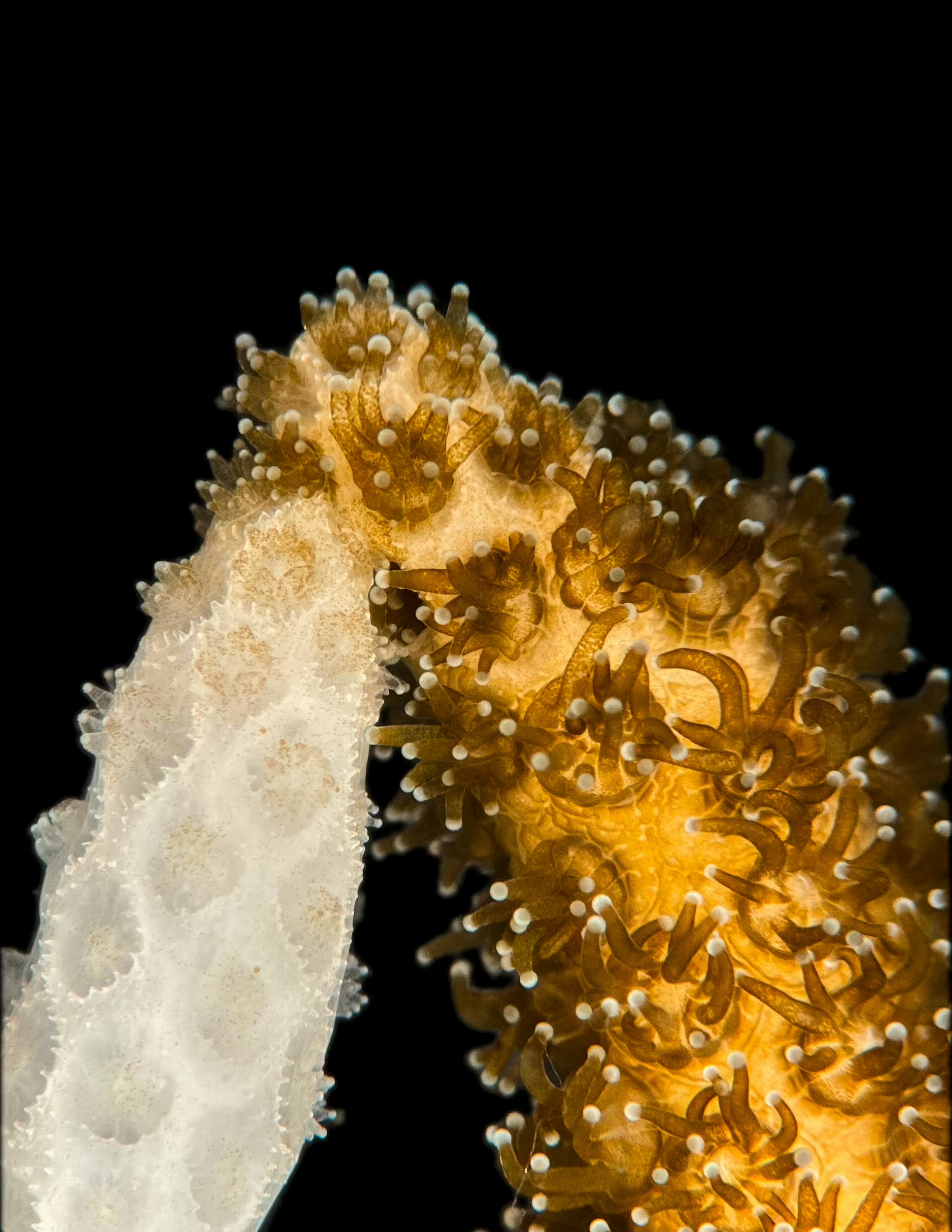
Bleached coral can look lifeless while the animal inside is still alive. A new laboratory study offers a striking demonstration of its capacity to recover: healthy coral fragments helped genetically identical, bleached fragments regain their algae and colour.
The research was published in Science Advances on 14 October. According to Stanford University’s account, the bleached fragments in five touching pairs recovered fully within seven weeks. Five comparison pairs, separated by just a few millimetres, did not recover.
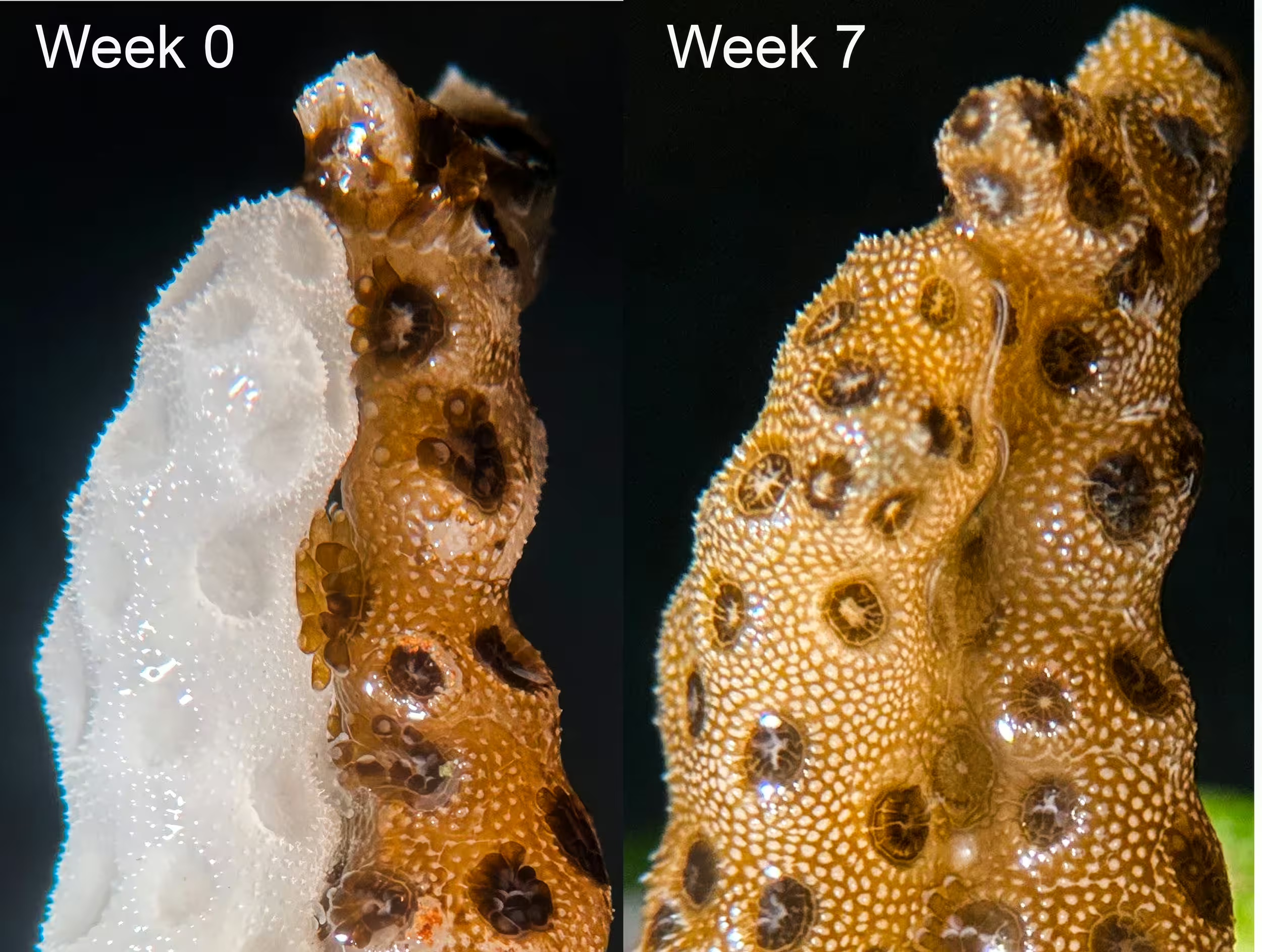
Lead researcher Danny Collins built the experiment after a chance observation in a tank: a healthy and a bleached fragment had fallen together, and colour began returning where they met. The deliberate tests showed that contact mattered.
Microscopy revealed a physical connection. The fragments fused their living tissues, opening channels through which beneficial algae could pass into the bleached partner. Once inside, those algae multiplied. After roughly a week of contact, bleached fragments could continue recovering even when separated from their healthy partners. The AAAS summary of the study describes tissue fusion as the mechanism enabling the rapid transfer.
The genetic condition is crucial. The successful partners were clones: pieces with the same genetic identity. Different genetic pairings produced hostile interactions, rather than the tissue bridge needed for this rapid recovery. Simply pressing unrelated corals together is not the intervention these results demonstrate.
NOAA explains that bleaching happens when stressed corals expel the microscopic algae living in their tissues. Those algae supply a major source of food and much of their colour. A bleached coral is vulnerable, but bleaching itself does not establish that the coral is dead. Recovery becomes harder when stress persists.
There is a substantial gap between this experiment and restoring a reef. Finding a healthy genetic twin for every damaged coral would be impractical. Stanford says the team plans to investigate ways of delivering algae without relying on this pairing. That remains a research goal. The study provides a new lead for recovery after bleaching; protecting corals from continued ocean warming remains essential.
Study photographs: Danny Collins / Stanford University. Published 14 October 2026; capture dates not stated. Stanford photo source.


