
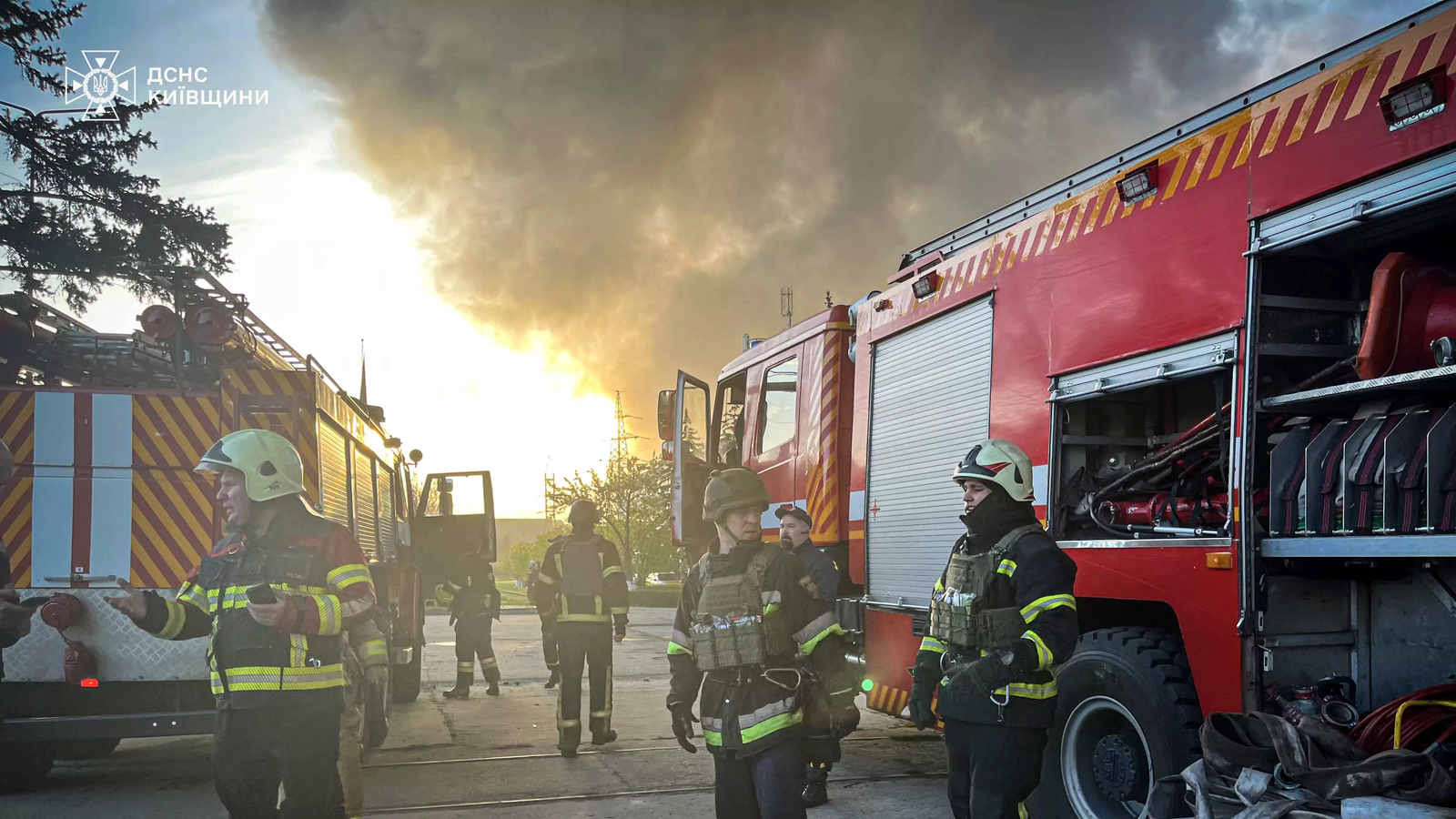
Photo credits
Photo: State Emergency Service of Ukraine / dsns.gov.ua / CC BY 4.0; cropped.Did Russia break the energy ceasefire?
Ukraine says Russia violated the energy ceasefire Donald Trump announced on 11 October. Reuters reported that accusation on 12 October following a strike on a thermal power plant in Kharkiv. The immediate question is what follows the reported attacks: verified restraint, an enforceable consequence, or another announcement without protection on the ground. (Reuters, 12 October)
In his 11 October address, President Volodymyr Zelenskyy said Ukraine was ready to refrain from attacks on Russian energy infrastructure if Russia reciprocated, while reporting a strike on Kharkiv’s CHP-5 plant. His account is a primary statement from a party to the conflict. It does not independently establish every detail of the attack. (Ukrainian presidency, 11 October)
On 12 October, Naftogaz separately reported an overnight attack on gas-production infrastructure in the Kharkiv region, saying equipment was damaged. AP also reported that Kremlin spokesman Dmitry Peskov did not confirm Russian agreement to the ceasefire and said contacts continued. The announced pause and mutually confirmed terms should therefore be distinguished. (Naftogaz, 12 October; AP, 12 October)
Does the diesel licence depend on Russia stopping attacks?
WDWK checked General License 135, dated 9 October. Its text contains no ceasefire condition or automatic end to permission after an energy strike. This finding describes the published document, not any private political understanding.
Our enforcement test is straightforward: identify a benefit that depends on compliance, then ask who withdraws it after a verified breach. A threat of future consequences is different from an automatic rule. Officials could still negotiate or announce consequences separately. The practical question is whether a violation changes the benefits available to the violator.
| Published measure | What the reviewed evidence establishes | What remains unresolved |
|---|---|---|
| Diesel licence, 9 October | Published transaction permission | No ceasefire trigger in its text |
| Ceasefire announcement, 11 October | Trump announced an immediate energy pause | Mutually confirmed scope and enforcement |
| Ukrainian reports, 11–12 October | Kyiv and Naftogaz report continued energy attacks | Independent verification of each incident and the response |
Why could the effects be unequal?
An energy pause could protect facilities with different functions. Refineries turn crude oil into products such as transport fuels; electricity networks deliver power through transmission lines and substations. Those systems are connected to civilian life in different ways. Counting protected sites alone would miss their output, the people relying on them and how quickly damaged services can return. (EIA refinery explainer; EIA grid explainer, background)
WDWK’s analysis is conditional: if Ukraine stops attacks that constrain Russian fuel production while Ukrainian power and gas facilities remain exposed, the practical exchange would be unequal. That outcome is a risk to test, not an established term of the proposal. A credible arrangement would need to specify which facilities are covered on both sides and demonstrate that the protection actually works.
What would make the ceasefire credible?
Four public answers would materially change the assessment: a start time accepted by both governments; a defined list or category of protected facilities; an agreed method to investigate alleged violations; and a stated consequence for non-compliance. The practical measure of success would be fewer verified attacks and more reliable services, rather than the wording of a social-media announcement.
Watch for a published reciprocal agreement, corroborated incident reports and a concrete US response to continued strikes. A revision to diesel permission would be one possible response; it should not be treated as promised or automatic. Until those details emerge, Ukraine’s accusation of a violation is the news, while enforcement is the unanswered analytical question.
Methodology
Source-based document comparison. WDWK examined GL135 alongside official Ukrainian statements, Naftogaz’s account and Reuters/AP reporting.



.webp)